

It is 11 p.m., the house is getting warmer, and the air conditioner has stopped. Before you call, a few checks take five minutes and fix a surprising number of nighttime outages. Below is what to check, in order, what not to touch, and how to tell when it is an emergency and when it can wait for morning.
What Should You Check First When the AC Stops at Night?
Work through these in order. Most take a minute or two.
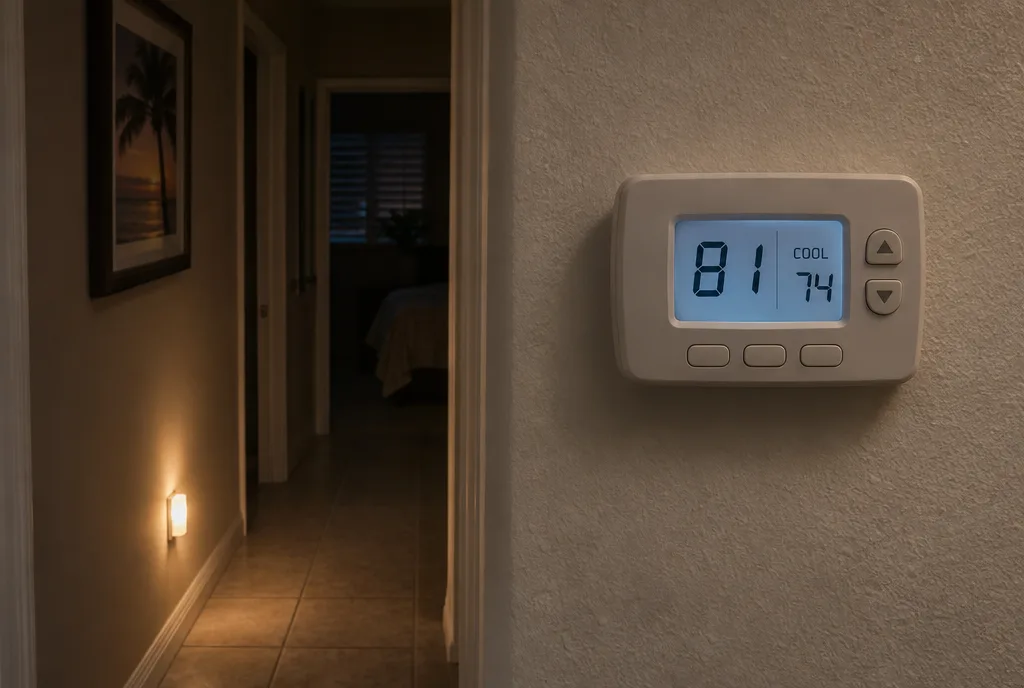
- The thermostat. Make sure it is set to COOL, the setpoint is below the room temperature, and the screen is on. A blank screen often means dead batteries or a tripped safety switch. Also check for a schedule that raises the temperature overnight.
- The breakers. Look for a tripped breaker for the air handler and the outdoor unit in the electrical panel. If one is tripped, reset it once. If it trips again, leave it off and call.
- The outdoor disconnect. Next to the outdoor unit there is a shutoff box. Make sure it has not been switched off or pulled.
- The condensate drain. Look at the indoor unit for water in the drain pan or a float switch on the drain line. A full pan shuts the system off on purpose. (More on this below.)
- The filter. A badly clogged filter can freeze the coil and stop the cooling. If it is gray and packed, replace it.
Why Did My AC Shut Off and the Thermostat Go Blank?

In Florida, one of the usual suspects is the condensate drain. Your system pulls water out of the air all day, and that water drains through one narrow PVC line. When algae and debris clog it, the drain pan fills and a float safety switch cuts power to the system so water does not overflow into the ceiling or floor. On many systems the thermostat goes blank at the same time.
This often shows up at night because the system ran hard all afternoon and the pan finally filled. If you see standing water in the pan, the system is protecting your house. Do not bypass the switch. A technician can clear the line and get the system running again; regular maintenance visits include clearing the drain so this does not happen in the first place.
Why Is the Fan Running but No Cold Air Is Coming Out?
If air is moving but it is not cold, the outdoor unit is usually the problem. Go outside and look:
- Nothing is running outside. Check the breaker and the disconnect. If both are on, a failed contactor or a low-voltage wiring problem is likely.
- The unit hums or clicks but the fan does not spin. This often points to a failed capacitor, the part that gives the motors their starting kick. Turn the system off so the compressor is not straining, and call.
- The fan spins but the air inside stays warm. The compressor may not be starting, or the system may be low on refrigerant. Both need a technician.
Capacitors and contactors are common repair parts on a Florida system, and they can fail without warning after a long, hot day. They are inexpensive parts, but they hold an electrical charge even with the power off, so they are not a do-it-yourself job.
Could the Coil Be Frozen?
Yes, and it is more likely at night than you might think. As the house cools down, an airflow problem such as a dirty filter or a closed-off return can let the indoor coil drop below freezing. Signs include ice on the copper line at the outdoor unit, weak airflow, and water around the indoor unit as the ice melts.
Turn the cooling off and leave the fan on to help the ice melt, which can take a few hours. Replace the filter if it is dirty. If the system freezes again after it thaws, it needs service; low refrigerant is a common cause, and running a frozen system can damage the compressor.
What Should You Not Do?
- Do not reset a breaker more than once. A breaker that trips twice is telling you something is wrong.
- Do not open the outdoor unit’s electrical panel or touch the capacitor.
- Do not bypass or remove the float switch to get the system running.
- Do not keep running a system that is iced over, buzzing loudly or smells like it is burning.
Is It an Emergency or Can It Wait Until Morning?
It depends on who is in the house and what you are seeing. Treat it as an emergency and call right away if:
- Someone in the home is 65 or older, an infant or young child, pregnant, or has a chronic medical condition. The CDC lists all of these groups as being at higher risk of heat-related illness.
- You smell burning or see smoke, or the breaker keeps tripping.
- Water is leaking into a ceiling, wall or floor.
- The house is already hot and the next day’s forecast is in the 90s.
If everyone in the house is healthy, the night is mild and nothing is leaking or burning, it is usually fine to turn the system off, open a window or run ceiling fans, and call first thing in the morning. Mauro’s Air repair diagnostics are $79, and you get the repair price before any work starts. For after-hours problems, see emergency AC repair.
How Do You Keep It From Happening Again?
Most nighttime failures, like a clogged drain, a weak capacitor or a dirty coil, give warning before they stop the system. Twice-a-year maintenance is how they get caught early, and a maintenance plan keeps the visits on the calendar. If your system is running nonstop before it quits, read why your AC runs constantly.
Frequently Asked Questions
Why does my AC stop working at night?
Common causes are a clogged condensate drain that trips the float safety switch, a tripped breaker, a failed capacitor or contactor after a long hot day, or a coil that froze as airflow dropped. Check the thermostat, breakers, drain pan and filter first.
Why is my AC compressor not turning on?
If the outdoor unit hums or clicks but does not start, a failed capacitor is a common cause. If nothing happens at all, check the breaker and outdoor disconnect; if both are on, the contactor or low-voltage wiring may have failed. Both need a technician.
Can I reset my AC myself?
You can reset a tripped breaker once and replace thermostat batteries. If the breaker trips again, the drain pan is full, or the unit is iced over, turn the system off and call for service.
When is no AC at night an emergency?
Call right away if anyone in the home is 65 or older, very young, pregnant or has a chronic medical condition, since the CDC lists these groups as higher risk for heat-related illness. Also call right away for burning smells, repeated breaker trips or water leaking into the house.
AC Out in Pasco, Hernando or Pinellas?
Mauro’s Air handles AC repair from our Hudson shop for homes across Hudson, Spring Hill, Trinity, New Port Richey, Port Richey, Bayonet Point and Palm Harbor.
Call (727) 378-5727. Office hours are 7:30 a.m. to 5 p.m. Monday through Thursday, and 7:30 a.m. to 4 p.m. Friday, and emergency service is available 24/7.